05 Liberty · Insurance
Transforming a multi-brand design system
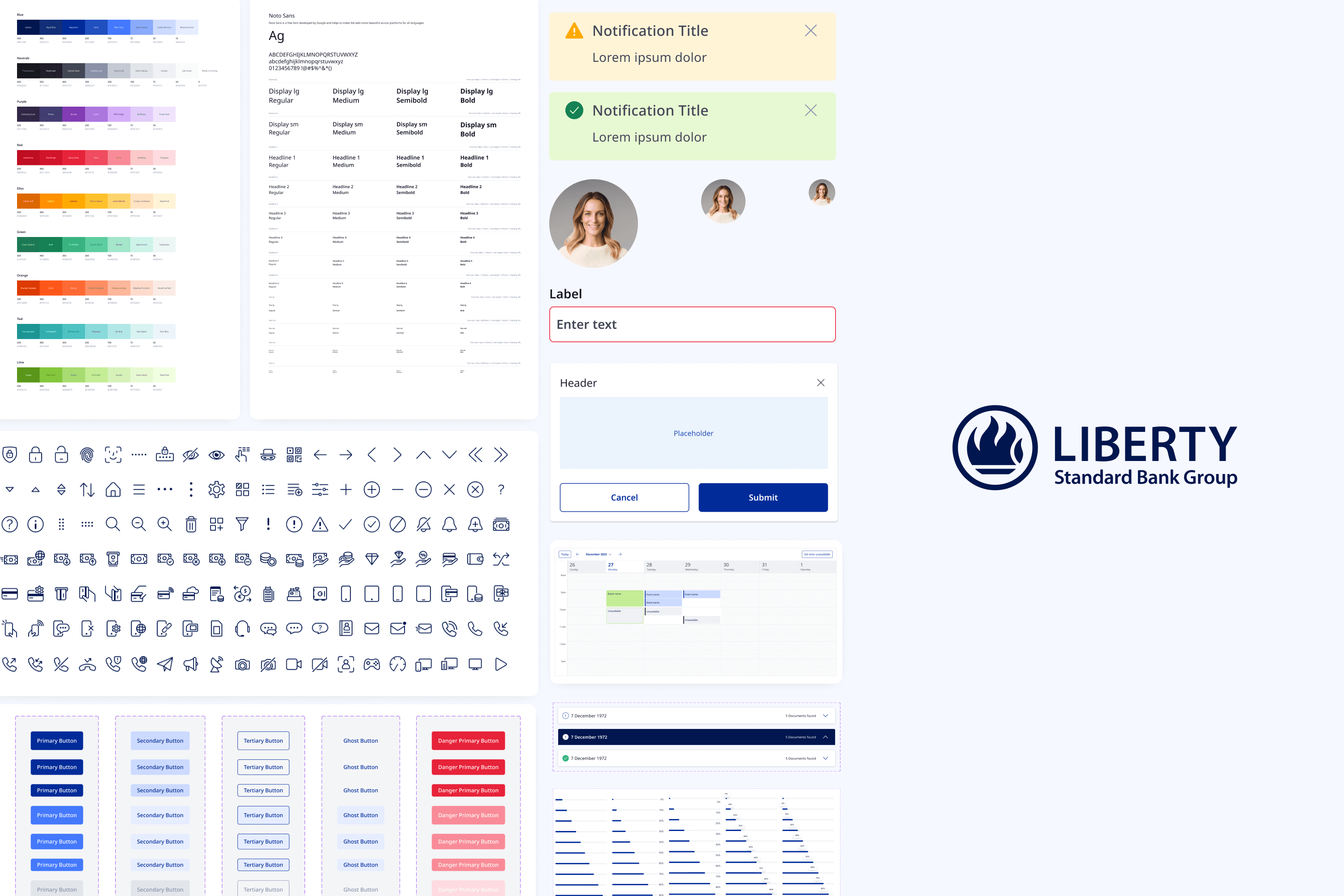
Liberty's libraries had grown into a fragmented, inaccessible set of components that teams avoided, with more than 54 button variations alone. Over 12 months I helped rebuild them into the Liberty Design System: one foundation for Liberty, Stanlib and Liberty Health, where I created components, shaped the roadmap with product teams and trained the designers using it.
- Role
- Senior UX/UI designer, consultant
- Timeline
- 2023 – 2024 (12 months)
- Brands
- Liberty, Stanlib, Liberty Health
- Audience
- Designers, developers, product teams
The challenge
As Liberty restructured and took on new brands, its existing design system caused a disjointed experience, slow workflows and growing design and technical debt.
High cost to ship
Inconsistencies and redundant work made every new product expensive to design and build.
Fragmented components
Components varied across teams and brands, with more than 54 button variations alone.
No governance
No ownership or contribution model, so the system grew organically and chaotically.
Brand dilution
No guidance on balancing corporate consistency with sub-brand needs.
Limited accessibility
Components fell short of WCAG, creating compliance risk and excluding people.
Low adoption
Outdated documentation meant designers and developers avoided the system.
The goal
Redesign the existing libraries and brand knowledge into a flexible, accessible and future-proof Liberty Design System (LDS) that works across brands and platforms.
The targets we set:
- A single source of truth for designers, developers and product teams
- Cross-brand consistency with controlled customisation
- WCAG 2.1 AA accessibility
- 30–40% less design and development time
- Sustainable governance and thorough documentation
My role
I was a senior UX/UI designer in the Experience Design team, alongside a team lead, a product manager and three other senior UX designers. Together we were responsible for redesigning and maintaining the system and driving its adoption.
Direction
Managed scope and strategic direction, and shaped the roadmap and backlog with product teams.
Craft
Created and managed components, and maintained and evolved the system as it grew.
Evidence
Ran user research, usability testing and ideation workshops with the people using the system.
Adoption
Supported and trained designers, ran showcases, and monitored delivery and adoption metrics.